Fragrance 101
What Are Clean Perfumes? Inside the Trend, the Science, and the Brands
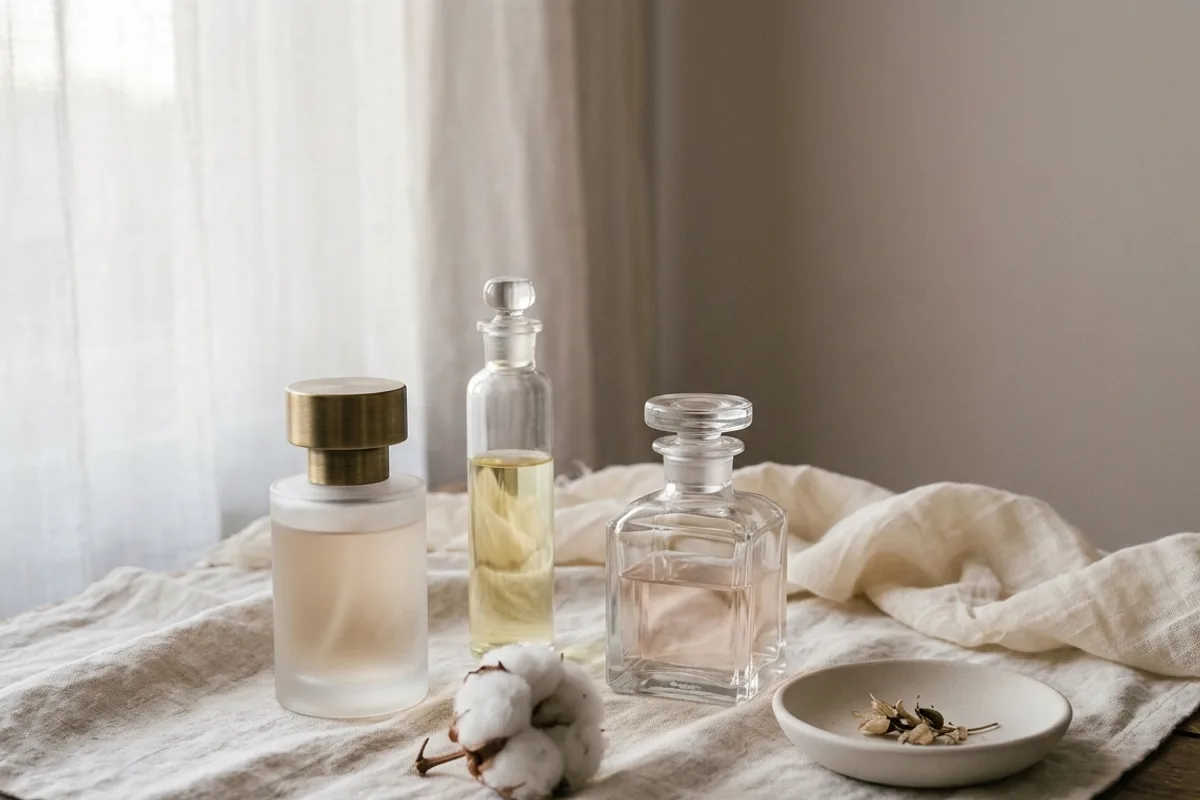
“Clean perfume” went from a niche wellness pitch in 2003 to one of the dominant marketing claims in the fragrance industry. There’s no regulator that defines it, no chemistry that proves it, and no agreement between brands about what it actually covers. There are also some genuinely interesting fragrances that came out of the category, which is why the term is worth understanding instead of dismissing.
What “Clean Perfume” Actually Means
“Clean” isn’t a legal term. The FDA doesn’t define it, the EU doesn’t define it, and IFRA (the fragrance industry’s safety body) doesn’t acknowledge it. Each brand sets its own bar.
That said, the typical clean-perfume claim excludes some combination of:
- Phthalates, specifically diethyl phthalate (DEP), the carrier used to dissolve aromatic ingredients in alcohol
- Parabens, preservatives that are already rare in modern perfumery
- Synthetic musks of the polycyclic family (galaxolide, tonalide)
- Sulfates, which aren’t actually used in perfume anyway (this is a skincare-marketing carryover)
- Formaldehyde and formaldehyde-releasing preservatives
- Animal-derived ingredients like ambergris, civet, and castoreum
- Sometimes: any synthetic aroma chemical at all (the strictest “natural perfume” tier)
The two most widely recognized stamps are Clean at Sephora (a retailer-defined list of 50-plus excluded ingredients, expanded again in 2024 to add PFAS in packaging) and EWG Verified (an environmental non-profit’s certification, generally stricter and requires public ingredient disclosure). Both are voluntary. Neither is regulator-backed.
The marketing layer rolls these into language about transparency, “skin-safe,” “non-toxic,” and “free from.” Whether that language reflects an actual safety improvement is the part the science gets ugly on.
A Short History
“Clean” as a fragrance term started with the brand actually named Clean, launched in 2003 by Randi Shinder. The pitch was simple: a perfume that smelled like good hygiene, fresh laundry, soap, skin. The brand sold well in Sephora through the 2000s and reinvented itself in 2013 as Clean Reserve with a focus on sustainably sourced naturals.
Then nothing happened for a decade.
After 2015, three things stacked on top of each other and created the category as it exists today.
First, brands like the Honest Company (Jessica Alba, 2011) and Beautycounter (2013) pushed “clean beauty” into the cultural mainstream in the mid-2010s. The framing was wellness-aligned and ingredient-skeptical, and it crossed easily into perfume.
Second, Sephora launched the Clean at Sephora seal in 2018. Suddenly hundreds of products had a public, retailer-policed standard to point at, and “clean” stopped being something a brand had to define alone. Brands signed up because the seal got prominent shelf placement and a dedicated category page.
Third, a cluster of new brands launched in 2015-2019 built their entire identity around the category:
- Phlur (2015): subscription-driven, ingredient-transparent, eventually relaunched in 2021 and known for the Missing Person fragrance
- Ellis Brooklyn (2016): editorial-driven, hex-cap bottles, founded by Bee Shapiro
- DedCool (2016): LA-based, gender-neutral, viral on TikTok
- Skylar (2017): hypoallergenic, vegan, 1,300+ ingredients excluded
- Henry Rose (2019): Michelle Pfeiffer’s brand, the first fine fragrance line to be both EWG Verified and Cradle to Cradle Certified
The pandemic accelerated everything. People stuck at home had time to read INCI lists, and ingredient skepticism became a default shopping behavior. By 2022, every major retailer had a “clean fragrance” section. By 2025, Phlur had become the most-mentioned fragrance brand among beauty influencers, full stop.
The Brands Worth Knowing
Henry Rose. The most rigorous on paper. Every ingredient is disclosed publicly on the brand site, the line is EWG Verified, and the perfumes themselves are co-developed with Firmenich, the same fragrance firm behind work for Hermès and Tom Ford. Notable releases include Jake’s House (cedar, sandalwood), Fog (vetiver and a smoky tea note), and London 1983 (a 2026 launch built around oakmoss). Pfeiffer reportedly spent years getting the EWG certification, including reformulating until the brand could meet the standard without losing the fixatives perfumers consider load-bearing.
Phlur. The most commercially significant clean-fragrance brand of the decade. Originally founded in 2015 as a subscription service, it was acquired in 2021 by Chriselle Lim and Eric Korman, who relaunched it with a tighter editorial focus. Missing Person, a soft musk and skin scent built around iso E super, sold out repeatedly in 2022 and 2023, fueled almost entirely by TikTok. It is the most influential clean fragrance of the post-pandemic era, period.
Skylar. Founded by Cat Chen, formerly of the Honest Company. Aimed squarely at people with skin sensitivities or scent-allergy issues. The entire line is hypoallergenic and the brand publishes its full ingredient ban list. Pinking Lily, Coconut Cove, and Vanilla Sky are the bestsellers, all leaning sweet and gourmand-adjacent.
Clean Reserve. The original. The Skin, Warm Cotton, and Solar Bloom lines have been in the Sephora rotation since the early 2000s and got a sustainability-focused refresh in 2013. The juice is competent, the bottles are affordable, and the brand has long since stopped trying to compete with the more design-driven new wave. Worth knowing because it predates the entire current category.
Ellis Brooklyn. Probably the most editorially considered of the bunch. The bottles look like reissues from a 1970s European boutique, and the perfumer credits are real. Jérôme Epinette (responsible for chunks of Atelier Cologne’s catalog) developed several of them. Bee, Myth, and Vetiver Est are the standouts.
DedCool. Calls itself a “fragrance house for everyone,” sells gender-neutral compositions under simple numbered names (01 Taunt, 02 Fool, etc.), and built its audience through Instagram and TikTok. Milk is the breakthrough scent — a clean, sweet musk that became a 2023 wedding-fragrance staple.
Maison Louis Marie. Not explicitly marketed as “clean” but EWG Verified and shelved alongside the category at almost every retailer that carries it. No.04 Bois de Balincourt, a cedar and sandalwood priced like a niche fragrance but sold widely, went viral on TikTok in 2022 as the “old money quiet luxury” scent everyone suddenly wanted. Some of the best-composed perfumes in the category.
Heretic. Founded by perfumer Douglas Little. All-natural compositions, no synthetic aroma chemicals, which most clean brands won’t commit to. Dirty Lemon, Dirty Mango, and Dirty Vanilla are bold, weird, and the closest thing the category has to a Slumberhouse-style cult brand.
By Rosie Jane. More affordable than most of the category, available widely at Sephora and Target, and the rare clean brand with consistent quality across the whole line. Leila Lou and James are the bestsellers, both soft skin scents that wear like a nicer-than-usual body spray.
Snif. Try-before-you-buy model (you pay for samples, get refunded when you commit to a full bottle), gender-neutral, ingredient-transparent. Tring Tring, Way to Glow, and Dead Dunes have devoted followings.
The Science Problem
Most of the “toxic” ingredients clean brands exclude are not actually under regulatory restriction.
The most-cited example is phthalates. In perfume, the only phthalate that’s ever been used at meaningful concentrations is diethyl phthalate (DEP), which acts as a carrier to keep aromatic compounds dissolved in alcohol. DEP is approved as safe by the FDA, by the European Commission’s Scientific Committee on Consumer Safety, and by IFRA. The phthalates that are restricted in the EU (DEHP, DBP, BBP) are not used in fragrance and never were. The “no phthalates” claim mostly means “no DEP,” which mostly means “we found a different carrier.”
Several other clean-brand bogeymen run into the same problem:
- Synthetic musks. IFRA has already phased out the older problematic ones (musk ketone, musk ambrette). The current generation (galaxolide, iso E super) appears in everything from Chanel No. 5 to Le Labo Santal 33. See our guide to musk in perfume.
- Sulfates. Not used in perfume at all. This is a skincare-marketing term that got copy-pasted onto fragrance.
- Parabens. Were used as preservatives in some older formulas. Modern perfumes mostly use ethanol, which is its own preservative.
The other half of the issue is that “natural” doesn’t mean safer. A lot of the most restricted ingredients in fragrance are natural ones: oakmoss (allergen), citral from lemon (skin sensitizer), eugenol from clove (allergen), atranol (banned in the EU since 2017). A purely natural composition typically contains more of the regulated allergens than a modern synthetic one, not fewer.
This isn’t a knock on clean brands. Most of the better ones know all of this and don’t claim more than transparency. The issue lives in the marketing-language layer, where “non-toxic” implies the conventional alternative is toxic.
Why It Took Off Anyway
Three things made the category genuinely sticky, even with the messy science.
Transparency is a real consumer value, separate from safety. People want to know what’s in what they put on their skin. Even if the ingredients are fine, “we’ll tell you exactly what’s in it” beats “trust us.” Henry Rose’s public ingredient list isn’t safer than a Chanel formula. It’s just more knowable. That matters to a real slice of the market.
Composition style. Clean perfumers tend to work in a softer, skin-close register, partly because the strongest fixatives are off the table, partly because the contemporary audience favors that aesthetic anyway. Phlur Missing Person, DedCool Milk, and Maison Louis Marie No.04 all sit in the same territory: musky, intimate, low-projection, designed to smell like a slightly upgraded version of you. A whole generation of buyers wanted exactly that.
TikTok. The platform turned individual clean fragrances into household names in a way traditional perfume marketing couldn’t. Missing Person became “the breakup perfume” and sold out three times in 2022. No.04 Bois de Balincourt became “the boyfriend perfume.” Brands that pre-existed TikTok found themselves transformed by it.
What Clean Perfumes Actually Deliver
The honest pitch is roughly this: not necessarily safer juice, but more ingredient disclosure, often lighter compositions, often simpler bottles, and usually a contemporary aesthetic that leans into musk and skin-scent rather than the powerhouse register of older designer perfumery.
If you want a fragrance that wears like a slightly polished version of your own skin, the category is overrepresented in things you’ll like. If you want a heavy oriental, a smoky leather, or a loud floral, look elsewhere. Clean perfumes structurally underdeliver in those territories, because the most aggressive fixatives and the most projection-forward synthetic musks tend to be exactly the ingredients clean brands exclude.
How to Shop the Category
Two stamps are worth knowing:
- Clean at Sephora. Voluntary but retailer-enforced. The current list excludes 50-plus ingredients and was expanded in 2024 to ban PFAS in packaging. Not the strictest standard, but the most consistently applied at retail.
- EWG Verified. Run by the Environmental Working Group. Stricter than Sephora’s seal, requires full public ingredient disclosure and tighter limits on specific compounds. Henry Rose was the first fine fragrance line to earn it.
If your reason for going clean is a specific allergy or sensitivity, “clean” labels are less useful than the INCI ingredient list on the box. EU regulations require all 26 known fragrance allergens (linalool, limonene, citronellol, geraniol, etc.) to be listed individually above a certain concentration. That’s better information than any marketing seal will give you.
If your reason is the aesthetic — the soft, skin-close, ingredient-transparent style — the category is full of legitimately good fragrances. Phlur Missing Person, Maison Louis Marie No.04, and DedCool Milk are the obvious starting points. Henry Rose’s range is the most editorially serious of the bunch. Heretic is where you go when you want something stranger.
Sources
Not sure which fragrance is you?
Take our 90-second quiz — seven questions, three picks.
Related Coverage
Guide
What Is a Niche Fragrance?
Niche fragrances are made by specialist perfume houses in small batches, sold through limited outlets, and prized for artistic expression over mass appeal.
Guide
What is Musk in Perfume: The Scent of Desire
Musk is one of perfumery's oldest ingredients — a guide to its origins, shift from animal to synthetic sources, and role in modern fragrances.
Guide
EDT vs EDP vs Parfum: Which One Should You Actually Buy?
Eau de Toilette, Eau de Parfum, and Parfum differ in oil concentration, not quality. Here's how to pick the right one for your budget and skin.