Fragrance 101
Is Perfume Flammable?
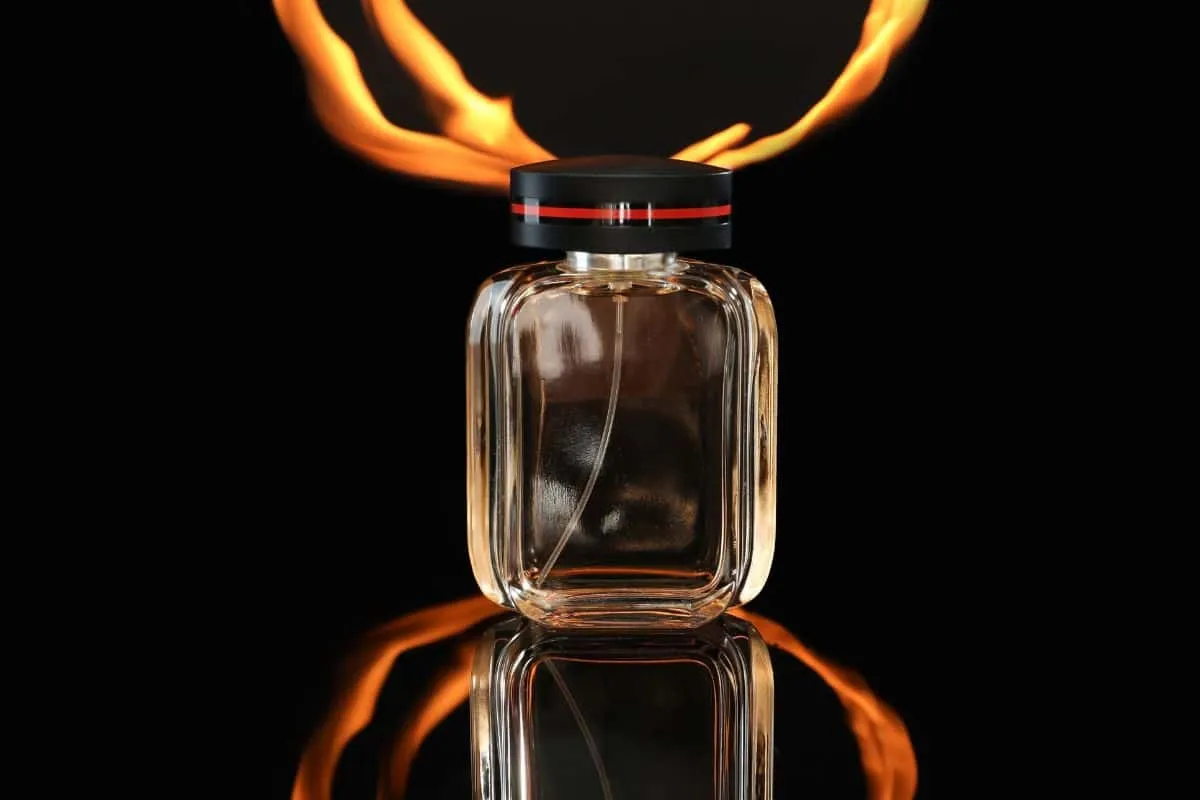
Yes. Most perfumes are mostly alcohol — anywhere from 50% to 95% by volume — and that makes them flammable. Whether that should worry you is a more useful question, and the short answer is: not really, as long as you don’t apply perfume next to an open flame.
The science, briefly
Perfume is essentially three things: aromatic oils (the scent), alcohol (the carrier that dissolves the oils and evaporates them off your skin), and a small amount of water. The alcohol is the flammable part. The higher the alcohol concentration, the more flammable the liquid.
Concentration varies by category. Eau de Parfum sits at the higher end of the alcohol range, Eau de Toilette in the middle, Eau de Cologne the lowest. None of them are safe around fire — they’re all flammable enough to ignite from a flame or a spark — but they sit on a continuum.
Practical safety
The actual risk is low if you’re careful about a few obvious things:
- Don’t apply perfume near an open flame. Candles, gas stoves, fireplaces, lighters. The classic risk is spritzing perfume and then immediately reaching for a lighter to light a candle or cigarette — the alcohol on your skin hasn’t fully evaporated yet, and it can catch.
- Store bottles away from heat. Direct sunlight, high temperatures, and humidity will degrade the juice itself faster than they’ll start a fire, but you shouldn’t keep perfume next to a heater or in a hot car either. A drawer or cupboard is fine. (If you have bottles to get rid of, see how to dispose of perfume safely — don’t just pour it down the drain.)
- Spray six inches from skin or clothes. Closer than that, the concentrated alcohol can briefly irritate skin. This isn’t really a fire risk, but it’s still the right distance.
What perfume flammability is not
Two things people sometimes worry about that aren’t actually risks:
- Perfume doesn’t spontaneously combust. It needs a direct ignition source — a flame, a spark, a hot surface. A bottle sitting on your dresser is not going anywhere.
- Perfume doesn’t usually cause burns from skin irritation. When people react badly to perfume on skin, it’s almost always an allergic reaction to one of the aromatic ingredients, not the alcohol. Patch-test on a small area if you’re concerned about a new bottle.
If you want to skip alcohol-based perfume entirely
There are a few formats that are either non-flammable or much less so:
- Solid perfumes are wax-based and come in a compact tin. TSA-friendly, easy to carry, and physically can’t ignite the same way. The trade-off: shorter wear and minimal projection.
- Oil-based perfumes use a carrier oil instead of alcohol. They last longer on skin than alcohol-based perfumes but stay close to the body, so projection is limited.
- Alcohol-free perfumes typically use water or glycerin as the base. Gentler on sensitive skin, less flammable, but usually shorter staying power and less sillage than a traditional spray.
Not sure which fragrance is you?
Take our 90-second quiz — seven questions, three picks.
Related Coverage
Guide
Perfume Strengths: 5 Levels Explained
Parfum, Eau de Parfum, Eau de Toilette, and Cologne differ in fragrance oil concentration, which directly affects how long a scent lasts and what it costs.
Guide
How to Dispose of Perfume Safely
Perfume is classified as household hazardous waste, so the bin and the drain are both off-limits — here are the safe, responsible ways to get rid of it.
Guide
EDT vs EDP vs Parfum: Which One Should You Actually Buy?
Eau de Toilette, Eau de Parfum, and Parfum differ in oil concentration, not quality. Here's how to pick the right one for your budget and skin.