Fragrance 101
What Ingredient Makes Perfumes Last?
No single ingredient makes a perfume last, but a few kinds of material do most of the work: musks, woody ambers and resins. They’re big, heavy molecules that evaporate slowly, so they’re still on your skin long after the citrus and flowers have gone. A perfume that lasts is one built on a lot of them.
Why Do Some Molecules Last Longer?
Size and stickiness. Small, light molecules like limonene (the main molecule in citrus peel) evaporate fast, so they’re the first thing you smell and the first to go. Larger, heavier molecules evaporate slowly and cling to skin and fabric. Perfumers call that clinginess substantivity.
That’s the real basis of top, middle and base notes. It isn’t three switches flipping in turn: everything starts evaporating at once, and the light materials simply run out first. Some woody materials can be noticeable from the first spray to the last.
Lasting and projecting are different, too. A perfume can stay on your skin for hours without carrying far (projection), and some of the most persistent materials are among the quietest.
Which Ingredients Make Perfume Last?
Three of the workhorses, all synthetics:
| Material | Smells like | Why it lasts |
|---|---|---|
| Iso E Super (IFF, 1973) | Soft, velvety cedar | IFF lists lasting substantivity from top to base. Woody, not musky |
| Galaxolide (IFF) | Clean, sweet musk | IFF describes strong persistence and high base-note impact. It’s the musk in laundry detergent |
| Ambrox (Firmenich) | Ambergris: woody, salty, mineral | Firmenich’s sheet describes very long tenacity on a smelling strip |
Natural materials can last too. Resins like labdanum and benzoin, vanilla, patchouli, sandalwood and oud are all slow to evaporate, which is why they so often turn up in the base. There’s no natural-versus-synthetic winner; it depends on the molecule. One thing to know is that these lab numbers describe a material on a paper strip, not hours of wear for a finished perfume on your skin.
What Is a Fixative?
Traditionally, a fixative was an ingredient that slowed down the evaporation of the rest of the perfume, so the lighter notes hung on longer. In practice, most modern “fixatives” are the persistent materials themselves: musks, woody ambers and resins that also make up the base you smell.
Some older fixatives had no smell of their own. The FDA notes that diethyl phthalate was historically used in fragrance as a solvent and fixative. That’s a different job from a lasting musk, which is why a “phthalate-free” label doesn’t tell you anything about how long a perfume lasts.
Can You Tell From the Notes Whether a Perfume Will Last?
Partly. A note list tells you about the smell, not the ingredients or the wear time. But if the base is full of musk, amber, oud, patchouli, sandalwood, vanilla or tonka, it’s built on materials that tend to linger. A perfume of citrus, herbs and light flowers will usually fade sooner, however it’s labelled.
“Amber” deserves a note: it’s an accord, usually labdanum, benzoin and vanilla, not fossilised amber, and it’s one of the longest-lasting styles. Our amber perfume list explains the recipe.
The useful question isn’t “will it last?” but “will I still like what’s left?” A perfume with a gorgeous citrus opening and a woody base will last, but it’s the wood you’ll be smelling at lunchtime.
Does Concentration Make a Difference?
Yes, but it’s not the whole story. An EDP contains more fragrance than an EDT, but brands often change the formula between versions too, so the EDP may simply have a different, heavier base. The concentration comparison explains why, and how long eau de parfum lasts covers comparing them yourself.
Can You Add a Fixative at Home?
Don’t. Adding raw fragrance chemicals, essential oils or resins to a finished perfume changes the formula and its concentration, can make it separate, and can make it harder on your skin. If a perfume fades too soon, a small top-up later is simpler. For your next bottle, pay as much attention to the drydown as to the opening.
Not sure which fragrance is you?
Answer seven questions to explore fragrances for your preferences.
Related Coverage
Guide
EDT vs EDP vs Parfum: Which One Should You Actually Buy?
EDT, EDP and Parfum differ in how much perfume oil they hold, and often in the formula too. What the labels mean, what alcohol does, and how Dior Sauvage changes across all three.
Guide
How Long Does Eau de Parfum Last?
An EDP outlasts an EDT, but the base notes decide how long it stays. Why citrus goes first and musk stays, why you stop smelling your own perfume, and how to make it last.
Guide
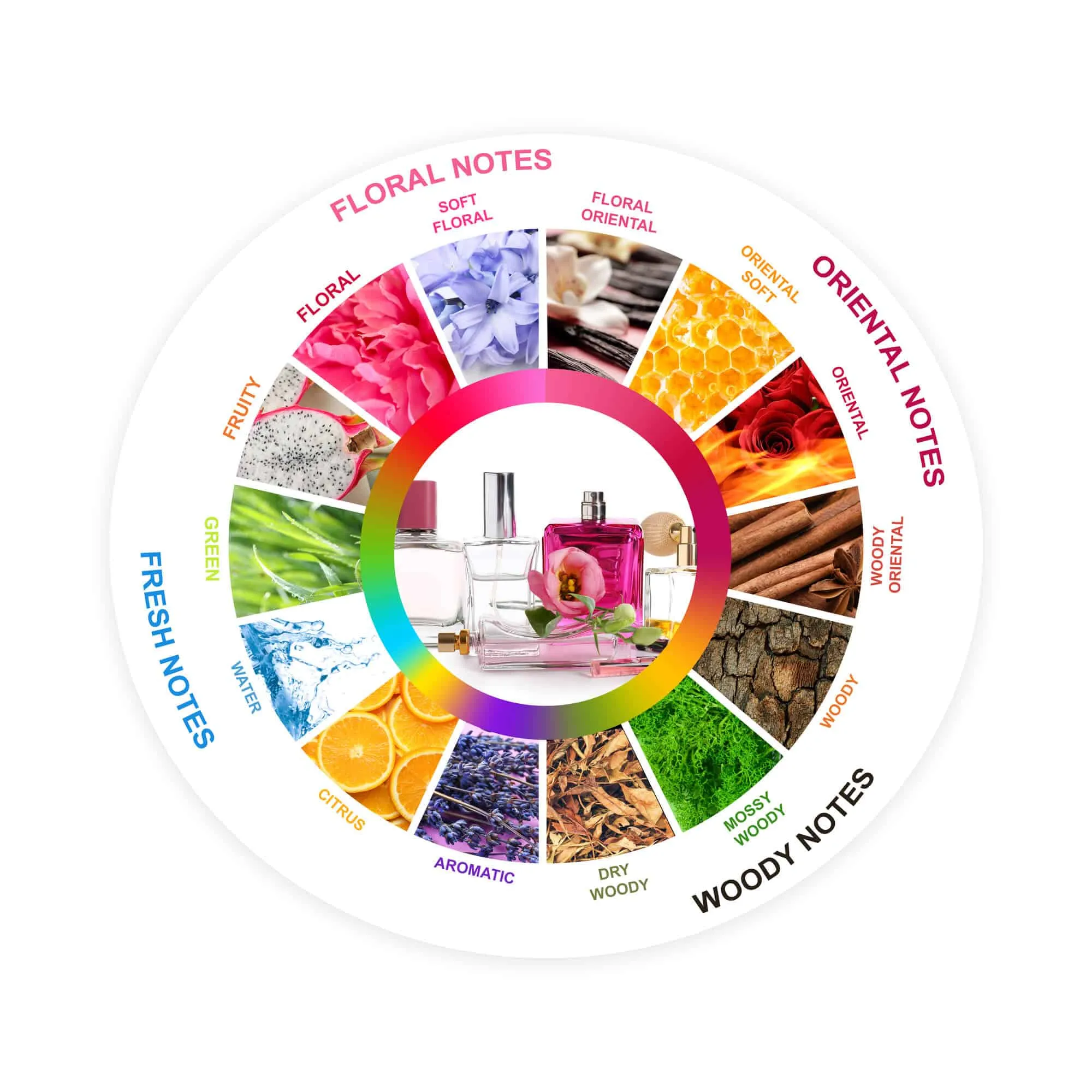
The Fragrance Wheel: 4 Main Perfume Families Explained
The fragrance wheel groups floral, amber, woody and fresh scents. Use these four families to describe perfumes, compare samples and find related styles.