Best Of
7 Perfumes That Smell Like Amber
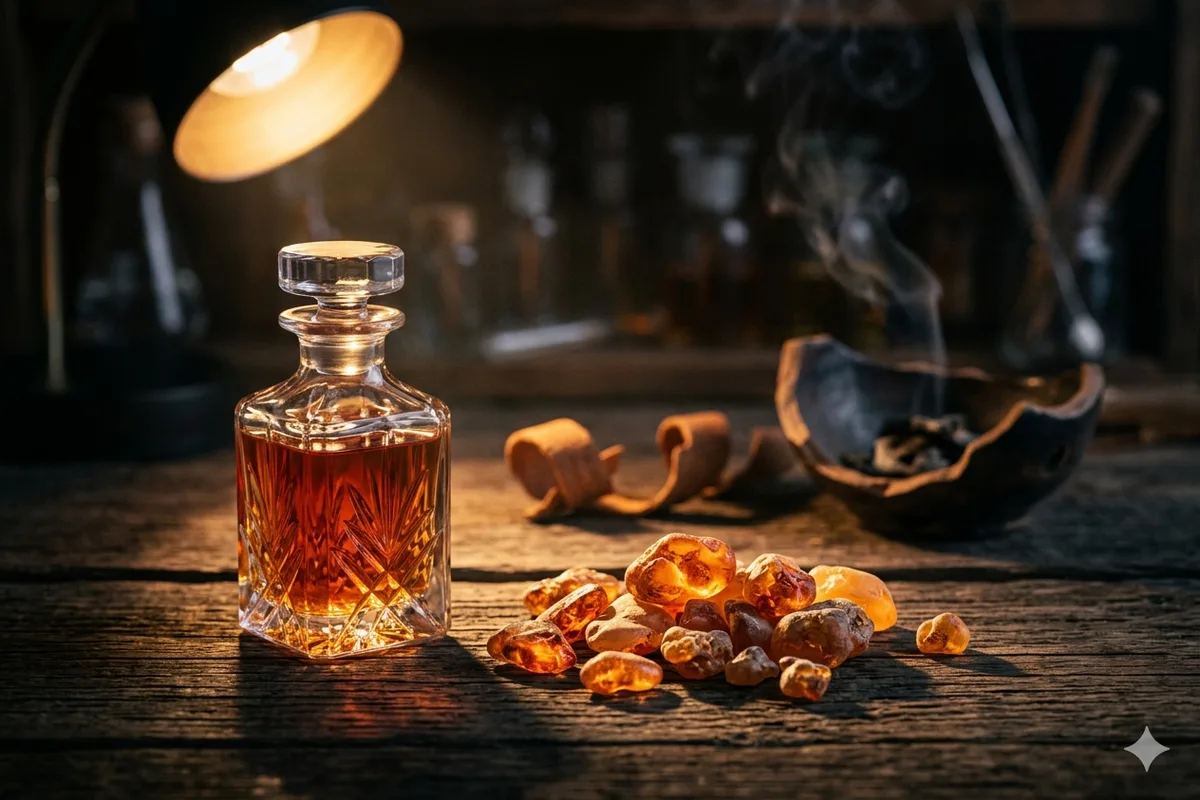
Amber is the most misunderstood word in perfume. The orange fossil resin with insects trapped inside barely smells of anything. Perfume “amber” is a warm, resinous, slightly sweet accord that perfumers build, and these seven show its range, from Serge Lutens’ herbal Ambre Sultan to Donna Karan’s soft Cashmere Mist.
What Is Amber in Perfume?
An accord, not an ingredient. The classic recipe is three materials:
- Labdanum, a sticky resin from the rockrose shrub. Dark, leathery, slightly animalic, with a smell close to warm skin.
- Benzoin, a tree balsam that smells of vanilla, caramel and cinnamon.
- Vanillin, the main molecule in vanilla, for sweetness.
In a Hermès launch interview, Jean-Claude Ellena explains the convention through vanillin and labdanum: sweet plus resinous makes amber. Perfumers then add spice, patchouli, woods or herbs to give each amber its own character. More on how accords work in the glossary.
Two more things get called amber, and they’re different again. Ambergris is a material from sperm whales, now almost always replaced by ambrox, which smells salty, woody and mineral. And since 2021, when fragrance classifier Michael Edwards dropped the word “oriental”, “amber” has also been the name of the whole fragrance family: warm, spicy, resinous perfumes in general.
| Perfume | The amber | What’s added |
|---|---|---|
| Serge Lutens Ambre Sultan | Resinous | Herbs, patchouli |
| Hermès L’Ambre des Merveilles | Resinous and sweet | Damp patchouli |
| MFK Grand Soir | Sweet | Cinnamon leaf, lavandin |
| YSL Opium | Spiced | Clove, myrrh, jasmine |
| Mancera Aoud Vanille | Gourmand | Oud, saffron |
| Givenchy Ange ou Démon | Floral | Thyme, saffron, oak |
| Donna Karan Cashmere Mist | Soft skin | Suede, jasmine, sandalwood |
7 Amber Perfumes
Serge Lutens Ambre Sultan
Ambre Sultan (1993) is the reference amber for niche perfume. Serge Lutens describes it as resinous, with vanilla and patchouli, and its story starts with a piece of amber resin Lutens kept in a thuja-wood box after a visit to Marrakech. The herbs in the opening are what make it: dry, almost oregano-like, they cut the sweetness so the labdanum smells like resin instead of candy.
One wearer loves the herbal opening but finds the later amber syrupy and dense. That’s the point of it. If you want amber at its darkest, start here.
Hermès L’Ambre des Merveilles
In the same Hermès interview, Ellena describes vanilla meeting the warmth of labdanum and the damp quality of patchouli. Damp is the right word: patchouli has an earthy, cellar-like side, and it stops the vanilla from turning into dessert. This is Hermès doing amber the way Hermès does most things: polished, restrained and quietly expensive.
Use the full name. Eau des Merveilles and L’Ombre des Merveilles are different perfumes.
Maison Francis Kurkdjian Grand Soir
MFK describes Grand Soir through cistus labdanum, lavandin and cinnamon leaf over an amber-vanilla accord with benzoin. Cinnamon leaf is drier and more clove-like than cinnamon bark, and lavandin adds a herbal lift, so this is the sweetest amber on the list with a little air in it. One wearer compares it to vanilla pudding; another finds long stretches of it dominated by cinnamon.
Yves Saint Laurent Opium
Opium (1977) is one of the perfumes that defined the spicy amber family, and it caused a scandal over its name. The current Eau de Parfum lists mandarin, bergamot and lily of the valley, then jasmine, carnation and myrrh, over vanilla, amber and patchouli. Carnation smells of clove, and with myrrh it gives the amber a dark, incense-like spice. It has been reformulated several times, and the current version is still unmistakable.
Mancera Aoud Vanille
Aoud Vanille (2015) puts oud, saffron, black pepper and cardamom on top of Madagascar vanilla, guaiac wood and sandalwood. It’s amber in the Middle Eastern style: oud’s smoky, leathery depth with a lot of vanilla, and saffron’s leathery, honeyed note tying them together. Less subtle than the French picks, and a fraction of the price of Ambre Sultan.
Givenchy Ange ou Démon
Givenchy lists white thyme, mandarin and saffron, then lily and ylang-ylang, then oakwood and tonka bean. Thyme in a sweet floral amber is an odd choice that works, the same trick as the herbs in Ambre Sultan. The white flowers make it the most obviously “perfume” of the seven. It launched in 2006.
Donna Karan Cashmere Mist
Cashmere Mist (1994) is amber at its softest. The Eau de Parfum lists bergamot, lily of the valley and ylang-ylang, then suede, cashmeran and jasmine, over sandalwood, amber and musk. Cashmeran is a synthetic that smells musky, woody and slightly dusty, like a wool sweater, which suits the name. This is the amber you’d wear to the office: closer to warm skin than to a resin.
Which Amber Should You Pick?
- Dark and resinous: Ambre Sultan.
- Polished: L’Ambre des Merveilles.
- Sweet: Grand Soir.
- Spiced and dramatic: Opium.
- Vanilla and oud: Aoud Vanille.
- Floral: Ange ou Démon.
- Soft, for daytime: Cashmere Mist.
If the patchouli in Ambre Sultan and L’Ambre des Merveilles is what you like, try patchouli perfumes. If it’s the vanilla, these vanilla perfumes go sweeter, and oud perfumes go darker.
Not sure which fragrance is you?
Answer seven questions to explore fragrances for your preferences.
Related Coverage
List
7 Perfumes That Smell Like Oud
Seven oud perfumes from Tom Ford Oud Wood and MFK OUD satin mood to Montale Black Aoud, and why most 'oud' in perfume is an accord built from cypriol, woods and leather.
List
8 Perfumes That Smell Like Vanilla
Eight vanilla perfumes from Guerlain Shalimar and Kayali Vanilla 28 to Tobacco Vanille and By the Fireplace, and why vanillin smells the way it does.
List
7 Perfumes That Smell Like Patchouli
Seven patchouli perfumes, from Mugler Angel and Portrait of a Lady to Coco Mademoiselle and Diptyque Tempo, and how fractionated patchouli made the note respectable again.