Guides
How to Get Perfume Off Your Skin (and Why It Clings)
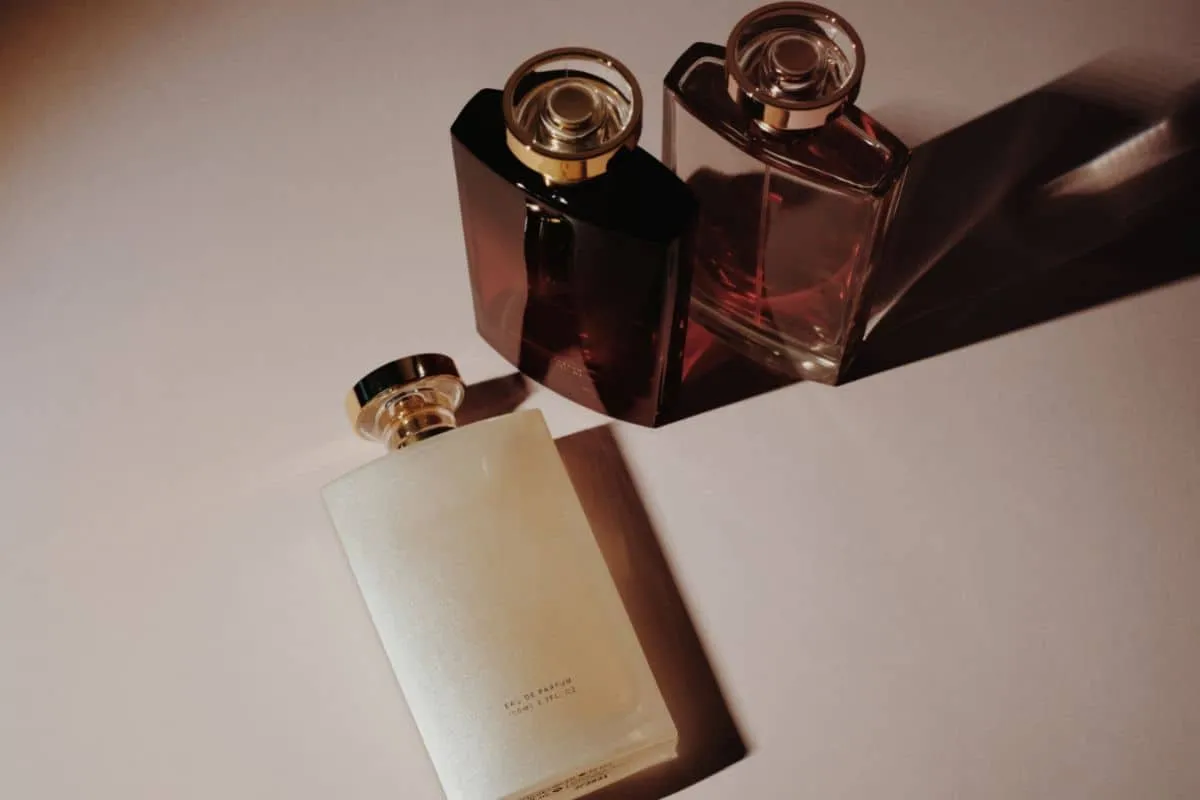
Wash the application area gently with your normal skin cleanser and lukewarm water, rinse, and pat dry. If the scent is also on a sleeve, scarf or collar, change that item too. Don’t try to hide an unwanted perfume under another fragrance.
Usually this is the perfume counter’s fault: three sprays of something you’d never have chosen, an hour before dinner. Keep the removal gentle. Repeatedly scrubbing your skin can leave you with a bigger problem than the scent.
Why Won’t Perfume Wash Off?
Because the part you can still smell isn’t the part that was wet. Perfume is mostly ethanol, and that evaporates within minutes. What stays behind are the heavy base materials: musks, woods, Ambroxan, Iso E Super. These are big, oily molecules that barely dissolve in water and settle into the oils and outer layer of your skin, which is exactly what they were chosen to do. Our guide to what makes perfume last has the chemistry.
So water alone does very little, and it doesn’t matter whether the perfume started out in alcohol or oil. You need something that picks up oily molecules: soap first, and if that isn’t enough, an oil.
Soap and Water
Start with a mild, fragrance-free cleanser that you already tolerate. Use your fingertips rather than an abrasive cloth, rinse thoroughly, and check once the area is dry. A strongly scented soap can add another smell and make the result harder to judge.
Poison Control recommends washing perfume off with soap and water and discontinuing the product if a skin reaction occurs. The American Academy of Dermatology similarly advises gentle washing and stopping a product that causes a reaction.
If the perfume is simply stronger than you wanted, one gentle wash may be enough to reduce it. Don’t keep washing until the skin feels tight or sore just to remove the last trace.
What If Some Scent Remains?
Work out whether the smell is coming from skin, clothing or hair before applying more cleanser. A sprayed cuff can keep smelling after you have washed your wrists.
If your skin feels normal and you already use a suitable cleansing oil or makeup remover, follow that product’s directions for the area involved. Remove or rinse it as directed rather than leaving an extra layer on the skin. Don’t experiment with several new products at once.
That’s why a cleansing oil often works where soap didn’t. Oil dissolves oily molecules, so it lifts the musks and woods off the skin, and the cleanser’s own emulsifier then rinses the lot away. The old rule, “oil-based perfume needs oil, alcohol-based perfume needs alcohol”, gets this backwards: by the time you’re trying to remove it, the alcohol has long gone, and the carrier doesn’t matter.
Should You Use Rubbing Alcohol?
Rubbing alcohol isn’t the first choice for removing perfume from skin. It dissolves some fragrance materials, but it strips the skin’s own oils along with them. More solvent and repeated rubbing can be irritating, particularly when the perfume has already left the area sore. Stay with gentle cleansing instead of escalating to alcohol wipes, nail-polish remover or household cleaning products.
Don’t apply those products to the face, near the eyes, or on broken or irritated skin to chase a lingering scent. Fragrance-free moisturizer you normally tolerate may help skin that feels dry after washing, but it isn’t a perfume remover.
Do Steel Soap or Tomato Paste Work?
Neither is a useful first step for a perfume you want off your skin. Steel soap is a bar of stainless steel sold for garlic and fish smells; the theory is that the sulphur compounds in those smells bind to the metal. Even if that’s true, perfume isn’t made of sulphur compounds, so there’s nothing for the steel to grab. Tomato paste is acidic, and acid doesn’t break down musks. Mostly it covers one smell with another, and now you have tomato paste to wash off. You don’t need either to follow the gentle-washing advice above.
For the next perfume-counter visit, ask for a blotter first. Spray skin only after narrowing the choice, and use a light application. Our cologne-application guide explains how to assess it without wearing several competing scents.
What If Your Skin Is Itchy, Red or Burning?
Stop using the fragrance and wash it off gently. Avoid trying another scent, essential oil or stronger solvent on the same area. FDA guidance explains that fragrance ingredients can cause skin reactions and recommends speaking with a healthcare professional about suspected allergy symptoms.
Seek medical advice if symptoms persist or worsen. Trouble breathing, throat swelling or other signs of a severe reaction need emergency help. A scent being unpleasant and a product causing a reaction call for different decisions; don’t keep wearing something that is irritating your skin.
Not sure which fragrance is you?
Answer seven questions to explore fragrances for your preferences.
Related Coverage
Guide
How to Wear Cologne: Where to Spray and How Much
A practical guide to choosing, applying and storing cologne, with advice on spray amounts, shared spaces, sampling and reapplication.
Guide
What Ingredient Makes Perfumes Last?
Big, heavy molecules make perfume last: musks like Galaxolide, woody ambers like Iso E Super and Ambrox. Why they evaporate slowly, what fixatives do, and what notes can't tell you.
Guide
Can You Bring Cologne On A Plane?
U.S. carry-on and checked-bag perfume limits, the specific duty-free connection exception, and practical packing advice for bottles and travel atomizers.