Culture & History
Celebrity Perfumes: How the Business Actually Works
Ariana Grande Cloud
Celebrity perfumes account for a huge slice of the fragrance market, but the celebrities themselves rarely have much to do with what’s inside the bottle. The business is built on licensing deals, and understanding how those work explains why some celebrity scents become icons and most disappear within a year.
How a Celebrity Perfume Deal Works
The celebrity doesn’t make the perfume. A fragrance house — Coty, Interparfums, Parlux — licenses the celebrity’s name and likeness, then handles everything: development, manufacturing, distribution, retail placement. The ingredient suppliers behind many of these houses have faced their own price-fixing investigation. The celebrity shows up for photo shoots, does press, maybe gives feedback on a few scent samples. That’s about it.
In return, the celebrity gets an upfront payment plus royalties on sales. For an A-list name with a young female fanbase, that upfront number can be $3-5 million. Royalties typically land between 5% and 8% of gross sales.
The deals also include minimum guarantees. If the fragrance underperforms, the licensee still pays the agreed minimum. This protects the celebrity from a botched launch, though it also means fragrance houses are careful about who they sign. A licensing deal is a bet, and the house is the one putting up the capital.
David Beckham signed a 20-year deal with Interparfums in early 2026 targeting $120 million in annual sales. That’s the scale these agreements can reach when the name is right.
The Ones That Made Real Money
Elizabeth Taylor invented the model. White Diamonds launched in 1991 with a $20 million ad campaign, earned $35 million in its first season, and has generated over $1.5 billion in lifetime sales. At its peak, Revlon was selling four bottles per minute. Taylor was the first celebrity to treat fragrance as a serious business rather than a vanity project, and she stayed involved — she stipulated that 20% of all sales after her death go to the Elizabeth Taylor AIDS Foundation.
Jennifer Lopez kicked off the 2000s boom. Glow by JLo launched in 2002 and proved that a celebrity perfume could be a mass-market phenomenon, not just a department store curiosity. Her fragrance portfolio has reportedly generated over $2 billion.
Paris Hilton is the one nobody talks about. She’s released over 30 fragrances and crossed $3 billion in lifetime sales. The individual scents don’t get much critical attention, but the sheer volume is hard to argue with.
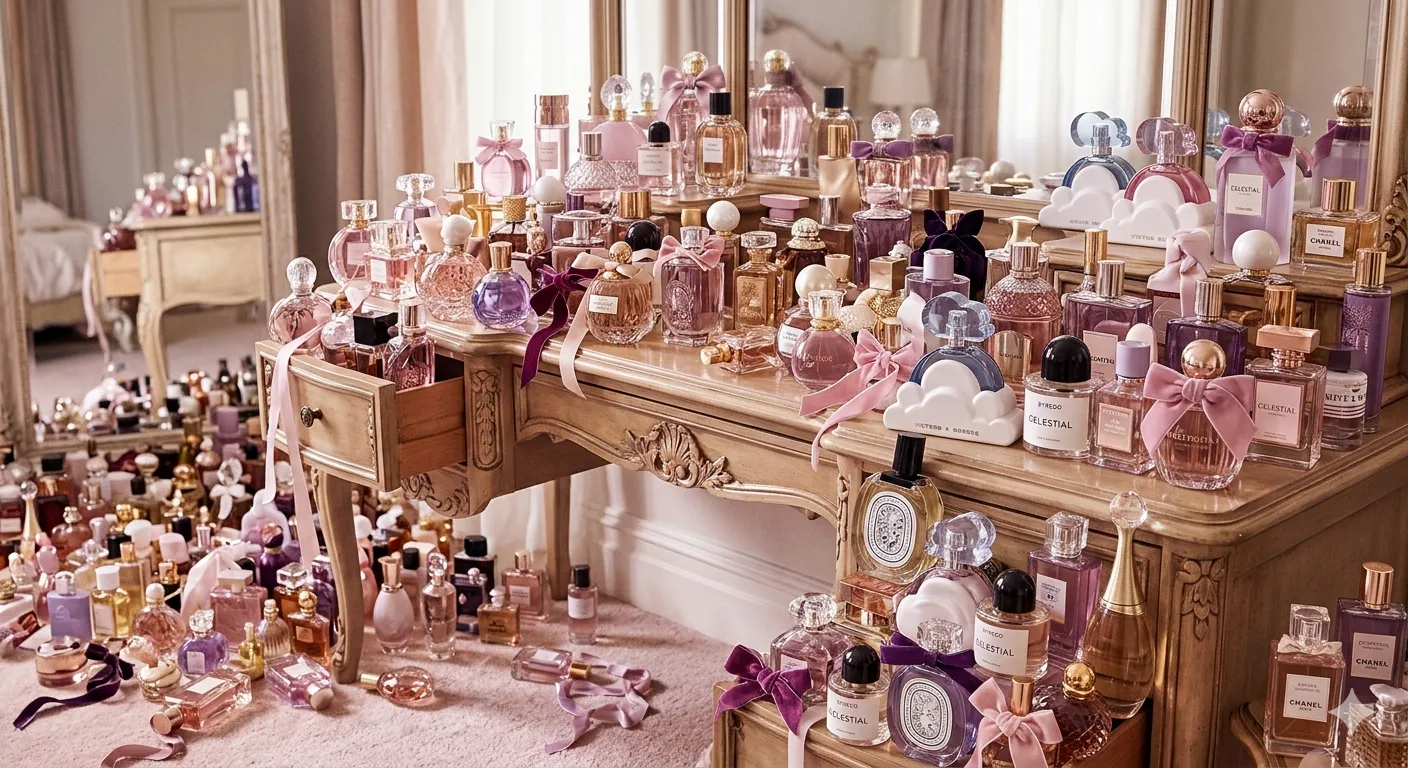
Ariana Grande proved the model still works for a new generation. Her fragrance line has crossed $1 billion in sales, driven largely by Cloud (2018), which won Fragrance of the Year in 2019. Cloud still sells heavily thanks to TikTok, where it gets recommended by people who aren’t even fans of her music. It’s a genuinely good lavender-coconut-musk blend that competes with designer Eau de Parfums at a third of the price.
Why Most of Them Fail
Between 2002 and 2010, it seemed like every famous person on earth launched a perfume. The market drowned in them.
The problem wasn’t just oversaturation. Most celebrity fragrances are developed by committee — safe, sweet, floral, forgettable. The celebrity picks from a handful of samples, the fragrance house plays it safe to protect their investment, and the result smells like every other celebrity fragrance on the shelf. When the scent is interchangeable, the only thing selling it is the name. And names have expiration dates.
Nicole “Snooki” Polizzi, Kate Walsh, Denise Richards — all launched fragrances that were gone within a year. By 2016, The Hollywood Reporter was writing post-mortems on the entire category. The celebrities who survived were the ones whose scents were actually worth repurchasing — a famous name gets someone to buy the first bottle, but only the juice gets them to buy a second.
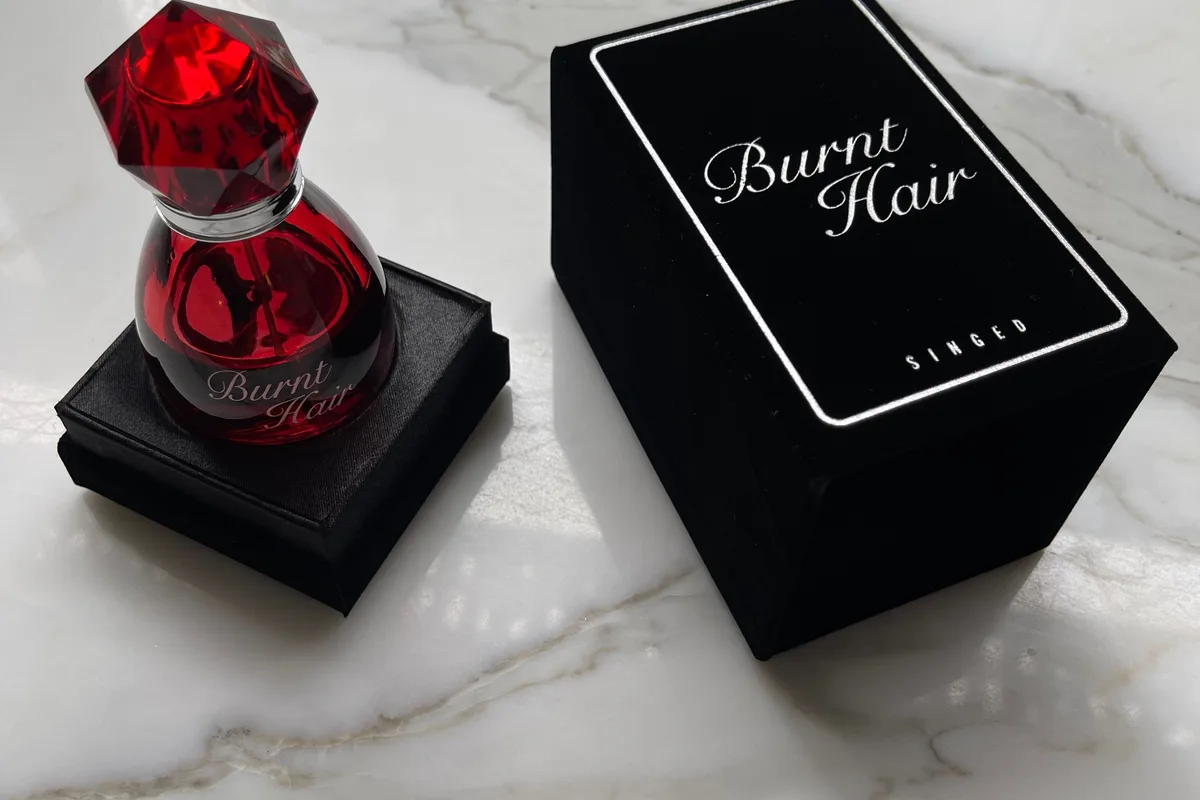
The exception that proves the rule: Elon Musk’s Burnt Hair, launched in 2022 through The Boring Company. It openly admitted to being a publicity stunt, never tried to convince anyone it was a real fragrance worth wearing, sold out in days, and was never restocked — arguably the most honest entry the category has produced, precisely because it never lied about what it was.
Licensing vs. Owning the Brand
The old model was pure licensing: hand over your name, collect a check, show up for the ad campaign. Britney Spears, J.Lo, and most 2000s celebrities operated this way. Low effort, low risk for the celebrity, but also low control.
The newer model looks more like what happened in fashion, where celebrities moved from endorsement deals to founding their own labels.
Rihanna started with licensed fragrances through Parlux (Reb’l Fleur in 2010, several others after). Then in 2021, she released Fenty Eau de Parfum through her own LVMH-backed brand, with Jacques Cavallier-Belletrud (Louis Vuitton’s in-house perfumer) developing the scent in Grasse. The result reads more like a niche release than a celebrity cash-in.
Billie Eilish took a similar path with her self-owned Eilish fragrance line — vegan, sustainably packaged, clearly a personal project rather than a licensing play.
The economics are different when you own the brand. Higher risk, higher upfront costs, but you keep far more than 5-8% of sales. And you control the product.
Are Celebrity Perfumes Actually Good?
Some of them genuinely are.
Cloud holds its own against fragrances that cost three times as much. White Diamonds is a legitimate classic white floral that’s outlived most of its contemporaries. Fenty Eau de Parfum is interesting enough to stand on its own without the Rihanna association.
The worst ones smell like they cost $2 to formulate — because they did. When a fragrance house is paying a celebrity millions in upfront fees and royalties, the temptation to cut costs on the actual juice is real. You can usually tell within the first ten minutes of wearing one whether the money went into the bottle or into the marketing.
The safest bet: if a celebrity fragrance has been on the market for more than three years and still sells, the scent is probably doing the heavy lifting, because celebrity hype rarely lasts that long on its own.
Ready to Buy?
Here are our top recommendations from this article.
Not sure which fragrance is you?
Take our 90-second quiz — seven questions, three picks.
Related Coverage
Guide
The Fragrance Industry's Price-Fixing Scandal, Explained
In 2023, regulators raided the four largest fragrance suppliers over suspected price collusion. Here's what happened and what it means for prices.
Guide
Whatever Happened to Burnt Hair, Elon Musk's Perfume?
In October 2022 Elon Musk launched a perfume called Burnt Hair. It sold out in hours. Here's what it actually smells like and what happened next.
Guide
How To Become A Perfumer
Becoming a professional perfumer takes around ten years of chemistry education, industry training, and sensory development — here is what that path looks like.