Scent Profiles
What Does Chanel Chance Smell Like?
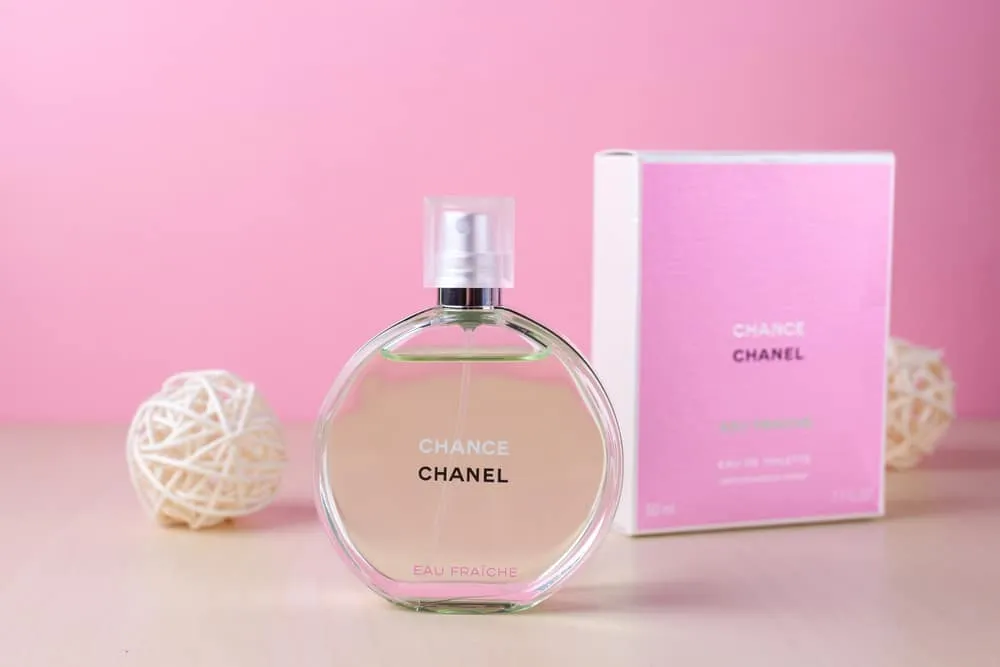
Chanel Chance Eau Tendre
Chanel Chance launched in 2002, designed by Jacques Polge. It was a deliberate departure from everything Chanel had been doing — a round bottle instead of the signature square, a fresh floral chypre instead of the aldehydic DNA of No. 5, and marketing aimed squarely at women aged 18 to 29. The gamble paid off. The line now includes seven variants, and choosing between them is the hard part.
The Chance Range
Chance Eau de Toilette (2002)
The original. A floral chypre built on pink pepper and citron up top, jasmine and hyacinth in the heart, and a dry patchouli-vetiver base. It reads more sophisticated than the later flankers — less sweet, more structured. Longevity is moderate at 4–5 hours, which is typical for an EDT. This is the version to reach for when you want something polished but not heavy, particularly in spring or office settings.
Chance Parfum (2002)
Released alongside the EDT, the Parfum concentration adds vanilla and ambrette seed while dialing up the amber. The bones are the same, but the effect is warmer and closer to the skin. Sillage is restrained — this one stays in your personal space rather than announcing itself across a room. It lasts noticeably longer than the EDT (6–8 hours) and works well in cooler weather or for evenings.
Chance Eau de Parfum (2005)
The strongest of the original trio. The formula is nearly identical to the Parfum, but the EDP pushes the floral heart harder — more jasmine, more iris — while keeping that vanilla-amber base. If you want the original Chance character with real projection, this is the one. It throws further than the Parfum and outlasts the EDT by a wide margin. The trade-off is that it can feel heavy in summer heat.
Chance Eau Fraîche (2007)
This is where the line starts to branch out. Eau Fraîche swaps the original’s chypre structure for a woody-floral profile, bringing in teak wood alongside the familiar patchouli base. The citron and pink pepper top notes carry over, but the overall impression is greener, more outdoorsy. It sits in an unusual space — not as sweet as Eau Tendre, not as structured as the original. Underrated as a daytime fragrance.
Chance Eau Tendre EDT (2010)
The bestseller of the flankers and arguably the most-worn Chance variant worldwide. Eau Tendre drops the chypre structure entirely in favor of grapefruit, quince, and a soft musk-cedar base. It smells fruity, clean, and approachable — the kind of scent that draws compliments from people who don’t normally notice perfume. Longevity is the main weakness: 3–4 hours before it fades to a skin scent. You will reapply.
Chance Eau Vive (2015)
The lightest Chance by a significant margin. Developed by Olivier Polge (Jacques’s son, who took over as Chanel’s head perfumer in 2015), Eau Vive leads with grapefruit and blood orange, lands on a sheer jasmine-iris heart, and dries down to cedar and vetiver. It barely registers after 3 hours. This is a warm-weather fragrance for people who want something citrus-forward and ephemeral — a splash rather than a statement.
Chance Eau Tendre EDP (2019)
Also from Olivier Polge, this is the stronger answer to the Tendre EDT’s longevity problem. It adds rose essence and jasmine absolute to the heart while keeping the grapefruit-quince opening and creamy musk base. The result lasts 6–7 hours with decent projection. If you loved the Tendre EDT but got tired of respraying by lunch, this is the upgrade.
What Type of Perfume Is Chanel Chance?
The original Chance (EDT, Parfum, and EDP) is classified as a chypre floral — a structure built on a contrast between bright citrus top notes and an earthy patchouli-vetiver base, with florals bridging the two. The later flankers (Eau Fraîche, Eau Tendre, Eau Vive) move away from the chypre structure into fresher, fruitier, or woodier territory. Calling the whole line “chypre” would be inaccurate.
What Is the Most Popular Chanel Perfume?
Chanel No. 5 still holds the top spot — it has nearly a century of cultural momentum behind it. Within the Chance line, Eau Tendre is the runaway favorite, particularly the EDT. It outsells the original Chance by a wide margin and regularly appears on bestseller lists alongside Coco Mademoiselle.
What Age Group Is Chanel Chance For?
Chanel designed Chance for the 18–29 demographic, and the round bottle, pastel color-coding, and lighter compositions all reflect that intent. In practice, the line has a much wider audience. The original EDT and EDP skew slightly older due to their chypre character, while Eau Tendre and Eau Vive land squarely with younger buyers. Age-based fragrance rules are mostly marketing anyway — wear what you like.
Table of Contents
- The Chance Range
- Chance Eau de Toilette (2002)
- Chance Parfum (2002)
- Chance Eau de Parfum (2005)
- Chance Eau Fraîche (2007)
- Chance Eau Tendre EDT (2010)
- Chance Eau Vive (2015)
- Chance Eau Tendre EDP (2019)
- What Type of Perfume Is Chanel Chance?
- What Is the Most Popular Chanel Perfume?
- What Age Group Is Chanel Chance For?
Ready to Buy?
Here are our top recommendations from this article.
Not sure which fragrance is you?
Take our 90-second quiz — seven questions, three picks.
Related Coverage
Guide
How Long Does Eau de Parfum Last?
Eau de Parfum typically lasts around six hours on skin, but where you apply it, how you layer it, and your skin type all affect how long the scent holds.
Guide
Perfume Strengths: 5 Levels Explained
Parfum, Eau de Parfum, Eau de Toilette, and Cologne differ in fragrance oil concentration, which directly affects how long a scent lasts and what it costs.
Guide
What is Musk in Perfume: The Scent of Desire
Musk is one of perfumery's oldest ingredients — a guide to its origins, shift from animal to synthetic sources, and role in modern fragrances.